
Key Takeaways
- A federal tax extension gives you until October 15 to file your individual return, but it does not extend the time to pay tax due.
- Filing an extension makes sense when your return would otherwise be incomplete or inaccurate.
- You should consider filing a tax extension if you’re dealing with missing documents, major life changes, self-employment complications, or unresolved reporting questions.
- If you already know your return isn’t ready, an extension is better than filing a return you’d need to amend later.
April 15 is approaching fast. If you’re still waiting on a stray 1099, or simply haven’t had the time to tackle filing your taxes, you might be wondering…
Should I file a tax extension?
Before we decide to hit the snooze button on your filing to give you more time, let’s look at how an extension actually works and whether it’s the right strategy for you this tax season.
What happens when you file a tax extension?
Filing a federal tax extension (formally known as IRS Form 4868) provides a six-month reprieve for your paperwork, but it is not a get-out-of-debt-free card.
When the IRS approves your extension, your filing deadline moves from April 15 to October 15. This extra time is designed to help you gather complex documentation, like Schedule K-1s or investment records, without the pressure of a looming mid-April cutoff.
The most common misconception I hear about tax extensions from my Hampton Roads clients is that an extension delays your tax bill. It does not. To avoid the most common penalties, you should keep these rules in mind:
- To avoid the failure to pay penalty, you must generally pay at least 90% of your total tax liability by the April 15 deadline.
- Even with a valid extension, any unpaid tax balance starts accruing interest on April 16. This rate is adjusted quarterly and compounds daily.
- If you don’t meet the 90% threshold, the IRS charges a penalty of 0.5% per month on the unpaid balance, up to a maximum of 25%.
An extension is less of a procrastination pass and more of a risk management tool. Because filing a rushed, incomplete return on April 15 often leads to:
- Increased audit risk triggered by inconsistencies between your return and third-party documents (like 1099s).
- Having to amend the return later using Form 1040-X often costs more in professional fees than filing an extension upfront.
So, if we file an extension, our goal is to use those extra six months to ensure every deduction is captured and that your return is accurate and defensible.
4 reasons for filing a tax extension
It’s always best to file on time when possible. But there are several scenarios where rushing to meet the April deadline does more harm than good.
If you’re in any of these situations, an extension might be the way to go.
Reason 1: You’re missing key tax documents
As a standard rule, you should not file a tax return until you have the information needed to report your income and deductions correctly.
If some of the forms you need are still missing, the return is not ready (something I’ve had to walk numerous Columbus One clients through). And choosing to file anyway can lead to omitted income, incorrect deductions, mismatched IRS records, and the hassle of an amended return later.
For example, if you’re still missing…
- A Form 1099 for freelance, contract, investment, or other nonemployee income
- A Schedule K-1 from a partnership, S corporation, or trust
- Brokerage statements showing dividends, interest, and capital gains
- Records supporting deductions, such as charitable contributions or medical expenses
…Then filing for an extension is your best option at this point.
Reason 2: You want to reduce mistakes
Yes, meeting the deadline matters. But accuracy matters just as much. And filing a rushed return can create problems that last well beyond April.
An overlooked deduction could mean missing out on tax savings. Worse, a reporting error or omitted income item can lead to notices, extra professional fees, and more time cleaning up something that could have been done right the first time.
An extension gives you room to slow down and do the return properly. That can help you:
- Verify income from all sources
- Confirm deductions and credits
- Review unusual transactions before filing
Oftentimes, an extension allows you to file a return you can stand behind.
And cutting corners usually means we have to file an amended return for you later. So, if you already know documents are missing or a reporting issue is unresolved, the cleaner option is to extend and file once.
Reason 3: A major life event changed your tax situation
Certain life changes can drastically affect how you should file your taxes. For example:
- Marriage or divorce can affect filing status and tax liability
- A new dependent can change credits and documentation requirements
- A move or job change can create state tax issues
- Retirement distributions can change taxable income and withholding
- Starting or closing a business can add entirely new reporting obligations
These are not the kinds of details you want to sort through in a hurry on April 14. An extension gives you time to work through it all with your Hampton Roads tax preparer and make sure your return is optimized for what happened last year.
Reason 4: You’re self-employed or waiting on business-related details
If you are a freelancer, contractor, sole proprietor, investor in a pass-through business, or just generate significant side income, your return depends on records that often take longer to acquire and organize.
You may still be working through:
- Final income and expense totals
- How your estimated tax payments affect what you owe now
- Deductible business expenses
- Asset purchases and depreciation
- Schedule K-1 information from business interests
Business-related returns tend to involve lots of record cleanup and classification questions. And if you rush into those areas, you’ll likely run into trouble.
Now, don’t hear what I’m not saying. A six-month extension does not replace good record-keeping habits. But it does give you a longer window to finish the work carefully.
%20(1).jpg)
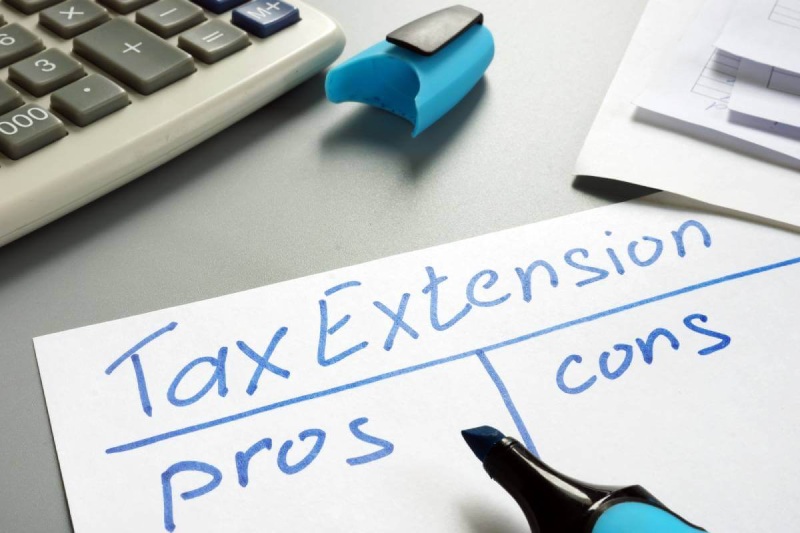
Pros and cons of filing a tax extension
Whether filing an extension makes sense for you comes down to what extra time will actually do for you. If it gives you the space to file a more accurate return, it can be a smart move. Here’s an overview of the tradeoffs.
Pros of filing an extension
- You get more time to file a complete return. Moving your filing deadline to October 15 gives you more time to gather records, review transactions, and make sure the return is accurate.
- You reduce the risk of mistakes. A hurried return is more likely to contain omitted income, missed deductions, or reporting errors.
- You can avoid amending the return. If you already know documents are missing or a tax issue is unresolved, you can avoid having to correct it later with an amended return.
- You have more time to deal with a complex tax situation. Self-employment income, investment sales, a Schedule K-1, or a major life event, can make your return less straightforward than usual.
- You avoid the late-filing penalty. That said, this ONLY helps with the filing side. It does not eliminate late-payment penalties or interest if the tax remains unpaid.
- You can contribute more to certain retirement plans. If you’re self-employed, an extension can give you extra time to make contributions to retirement plans like a Solo 401(k) or a SEP IRA.
Cons of filing an extension
- You don’t get more time to pay your tax. An extension gives you more time to file the return, but any tax due still needs to be paid by April 15. If you underpay, interest and late-payment penalties will still apply.
- Your refund is delayed. If your return is complete and you expect a refund, waiting to file means waiting longer to receive it.
- You bear the mental weight of filing for longer. Extending your return means you carry that mental load for several more months. During that time, you still have to gather records, answer tax questions, and complete the return properly.
- An extension doesn’t extend all other deadlines. Estimated tax payments and state filing requirements still have their own deadlines that you may have to meet, even if your federal return is extended.
- You might need a completed tax return. If you’re applying for a mortgage, refinancing, financial aid, or certain benefits, a filed return may be part of the process. So delaying your return can delay those applications too.
Final thoughts
If you’re reading this and realizing that filing a tax extension is the right move for you, let’s tackle that together.
I’ll get the extension filed properly for you and help you to file the most optimized tax return possible with those extra six months.
calendar.google.com/calendar/u/0/appointments/schedules/aczssz0-_jz2j6jxzjg1xtdpbeoy8xggfpkf
FAQs
“Is there a downside to filing a tax extension?”
The primary downside is that a tax extension does not delay your payment obligation. If you owe money and don’t pay by April 15, interest and late-payment penalties will accrue. Additionally, if you are expecting a refund, filing an extension simply delays the time it takes for that money to hit your bank account.
“Should I file an extension if I owe nothing?”
Yes. Even if you don’t owe taxes, filing an extension is a smart insurance policy. While the IRS doesn’t charge a failure-to-file penalty if your balance is zero, having an extension on record protects you if a last-minute document (like a corrected 1099) suddenly shows you actually had taxable income you weren’t aware of.
“What do you need to file a tax extension?”
To file IRS Form 4868, you only need basic information:
- Your name and address
- Your Social Security Number (or ITIN)
- An estimate of your total tax liability for the year
- The total amount of tax you’ve already paid (via withholding or estimated payments)
- A payment for any remaining balance you expect to owe (optional but recommended)
“Do you pay more taxes if you file an extension?”
No, you do not pay more in base tax. However, you might pay more in penalties and interest if you don’t pay your estimated balance by April 15. The IRS will add interest and a 0.5% monthly late-payment penalty to any balance still due after the April deadline.
“What happens if you don’t file your return by October 15?”
If you miss the extended October 15 deadline, you face the failure to file penalty, which is significantly more expensive than the failure to pay penalty. It starts at 5% per month of the unpaid tax, capped at 25%. After 60 days, the minimum penalty jumps to $525 or 100% of the tax due, whichever is less.
“What are valid reasons for filing a tax extension?”
The IRS does not require a specific reason. Extensions are automatically granted to anyone who files the form by April 15. The typical reasons include:
- Waiting on a Schedule K-1 or 1099.
- Recent marriage, divorce, or death in the family.
- Self-employment complexities or business record cleanup.
- Simply needing more time to ensure 100% accuracy.